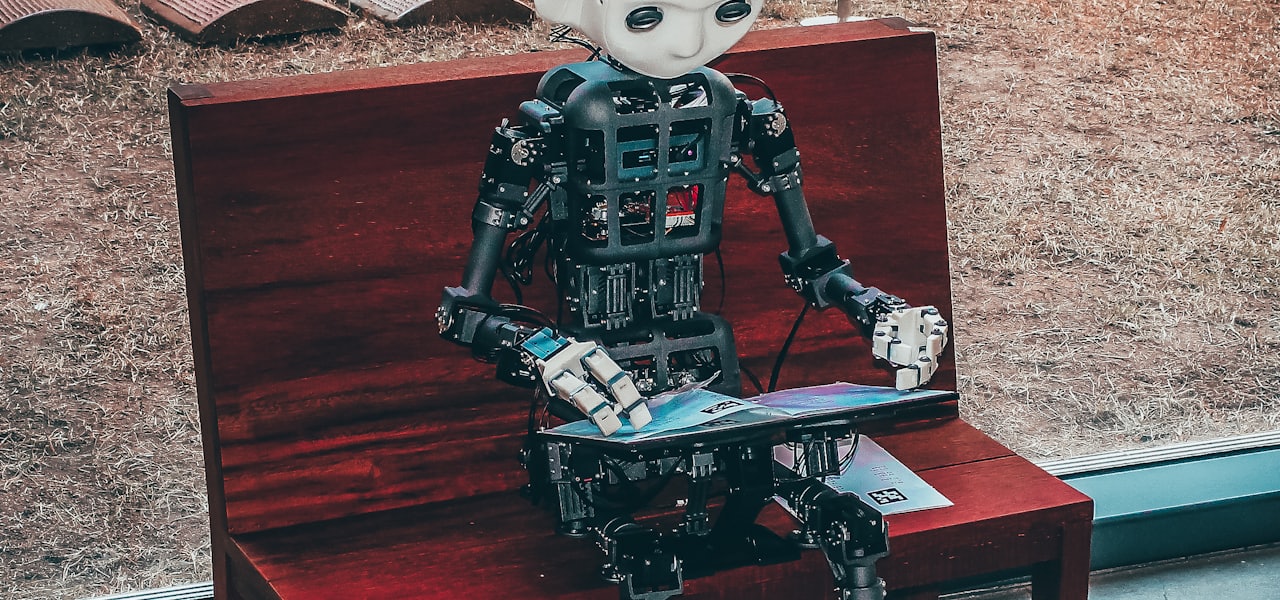
Artificial general intelligence (AGI) is a hypothetical type of artificial intelligence that matches or surpasses human capabilities across virtually all cognitive tasks. Beyond AGI, artificial superintelligence (ASI) would outperform the best human abilities across every domain by a wide margin. Unlike artificial narrow intelligence (ANI), whose competence is confined to well‑defined tasks, an AGI system can generalise knowledge, transfer skills between domains, and solve novel problems without task‑specific reprogramming. Creating AGI is a stated goal of technology companies such as OpenAI, Google, xAI, and Meta. A 2020 survey identified 72 active AGI research and development projects across 37 countries. AGI is a common topic in science fiction and futures studies. Contention exists over whether AGI represents an existential risk. Some AI experts and industry figures have stated that mitigating the risk of human extinction posed by AGI should be a global priority. Others find the development of AGI to be in too remote a stage to present such a risk. == Terminology == AGI is also known as strong AI, full AI, human-level AI, human-level intelligent AI, or general intelligent action. The term "artificial general intelligence" was used in 1997 by Mark Gubrud in a discussion of the implications of fully automated military production and operations. A mathematical formalism of AGI named AIXI was proposed in 2000 by Marcus Hutter, who defines intelligence as "an agent’s ability to achieve goals or succeed in a wide range of environments". This type of AGI has also been called "universal artificial intelligence". The term AGI was re-introduced and popularized by Shane Legg and Ben Goertzel around 2002. Some academic sources reserve the term "strong AI" for computer programs that will experience sentience or consciousness. In contrast, weak AI (or narrow AI) can solve a specific problem but lacks general cognitive abilities. Some academic sources use "weak AI" to refer more broadly to any programs that neither experience consciousness nor have a mind in the same sense as humans. Related concepts include artificial superintelligence and transformative AI. An artificial superintelligence (ASI) is a hypothetical type of AGI that is much more generally intelligent than humans, while the notion of transformative AI relates to AI having a large impact on society, for example, similar to the agricultural or industrial revolution. A framework for classifying AGI was proposed in 2023 by Google DeepMind researchers. They define five performance levels of AGI: emerging, competent, expert, virtuoso, and superhuman. For example, a competent AGI is defined as an AI that outperforms 50% of skilled adults in a wide range of non-physical tasks, and a superhuman AGI (i.e., an artificial superintelligence) is similarly defined but with a threshold of 100%. They consider large language models like ChatGPT or LLaMA 2 to be instances of emerging AGI (comparable to unskilled humans). Regarding the autonomy of AGI and associated risks, they define five levels: tool (fully in human control), consultant, collaborator, expert, and agent (fully autonomous). == Characteristics == There is no single agreed-upon definition of intelligence as applied to computers. Computer scientist John McCarthy wrote in 2007: "We cannot yet characterize in general what kinds of computational procedures we want to call intelligent." === Intelligence traits === Researchers generally hold that a system is required to do all of the following to be regarded as an AGI: reason, use strategy, solve puzzles, and make judgments under uncertainty, represent knowledge, including common sense knowledge, plan, learn, communicate in natural language, if necessary, integrate these skills in completion of any given goal. Many interdisciplinary approaches (e.g. cognitive science, computational intelligence, and decision making) consider additional traits such as imagination (the ability to form novel mental images and concepts) and autonomy. Computer-based systems exhibiting these capabilities are now widespread, with modern large language models demonstrating computational creativity, automated reasoning, and decision support simultaneously across domains. === Physical traits === Other capabilities are considered desirable in intelligent systems, as they may affect intelligence or aid in its expression. These include: the ability to sense (e.g. see, hear, etc.), and the ability to act (e.g. move and manipulate objects, change location to explore, etc.) This includes the ability to detect and respond to hazard. === Tests for human-level AGI === Several tests meant to confirm human-level AGI have been considered. ==== Turing test ==== The Turing test was proposed by Alan Turing in his 1950 paper "Computing Machinery and Intelligence". This test involves a human judge engaging in natural language conversations with both a human and a machine designed to generate human-like responses. The machine passes the test if it can convince the judge that it is human a significant fraction of the time. Turing proposed this as a practical measure of machine intelligence, focusing on the ability to produce human-like responses rather than on the internal workings of the machine. The idea of the test is that the machine has to try and pretend to be a man, by answering questions put to it, and it will only pass if the pretence is reasonably convincing. A considerable portion of a jury, who should not be experts about machines, must be taken in by the pretence. In 2014, a chatbot named Eugene Goostman, designed to imitate a 13-year-old Ukrainian boy, reportedly passed a Turing Test event by convincing 33% of judges that it was human. However, this claim was met with significant skepticism from the AI research community, who questioned the test's implementation and its relevance to AGI. A 2025 pre‑registered, three‑party Turing‑test study by Cameron R. Jones and Benjamin K. Bergen showed that GPT-4.5 was judged to be the human in 73% of five‑minute text conversations—surpassing the 67% humanness rate of real confederates and meeting the researchers' criterion for having passed the test. ==== Ikea test ==== The "Ikea test", also known as the Flat Pack Furniture Test, involves an AI controlling a robot which attempts to assemble an Ikea flat-pack furniture product after having been shown the parts and instructions. As early as 2013, MIT's IkeaBot demonstrated fully autonomous multi-robot assembly of an IKEA Lack table in ten minutes, with no human intervention and no pre-programmed assembly instructions. The robots inferred the assembly sequence from the geometry of the parts alone. ==== Coffee test ==== Steve Wozniak proposed a test where a machine is required to enter an average American home and figure out how to make coffee. It must find the coffee machine, find the coffee, add water, find a mug, and brew the coffee by pushing the proper buttons. This test has been substantially approached across multiple systems. In January 2024, Figure AI's Figure 01 humanoid learned to operate a Keurig coffee machine autonomously after watching video demonstrations, using end-to-end neural networks to translate visual input into motor actions. In 2025, researchers at the University of Edinburgh published the ELLMER framework in Nature Machine Intelligence, demonstrating a robotic arm that interprets verbal instructions, analyses its surroundings, and autonomously makes coffee in dynamic kitchen environments — adapting to unforeseen obstacles in real time rather than following pre-programmed sequences. ==== Suleyman's test ==== Mustafa Suleyman's test proposes giving an AI model US$100,000 and asking it to obtain US$1 million. ==== Use of video-games ==== Adams, et al. propose that the ability to learn and succeed in a wide range of video games can be used to test AI intelligence. This range would include games unknown to the AGI developers before the test is administered. === AI-complete problems === A problem is informally called "AI-complete" or "AI-hard" if it is believed that AGI would be needed to solve it, because the solution is beyond the capabilities of a purpose-specific algorithm. == History == === Classical AI === Modern AI research began in the mid-1950s. The first generation of AI researchers were convinced that artificial general intelligence was possible and that it would exist in just a few decades. AI pioneer Herbert A. Simon wrote in 1965: "machines will be capable, within twenty years, of doing any work a man can do". Their predictions were the inspiration for Stanley Kubrick and Arthur C. Clarke's fictional character HAL 9000, who embodied what AI researchers believed they could create by the year 2001. AI pioneer Marvin Minsky was a consultant on the project of making HAL 9000 as realistic as possible according to the consensus predictions of the time. He said in 1967, "Within a generation... the problem of
International Conference on Language Resources and Evaluation
The International Conference on Language Resources and Evaluation is an international conference organised by the ELRA Language Resources Association every other year (on even years) with the support of institutions and organisations involved in Natural language processing. The series of LREC conferences was launched in Granada in 1998. == History of conferences == The survey of the LREC conferences over the period 1998-2013 was presented during the 2014 conference in Reykjavik as a closing session. It appears that the number of papers and signatures is increasing over time. The average number of authors per paper is higher as well. The percentage of new authors is between 68% and 78%. The distribution between male (65%) and female (35%) authors is stable over time. The most frequent technical term is "annotation", then comes "part-of-speech". == The LRE Map == The LRE Map was introduced at LREC 2010 and is now a regular feature of the LREC submission process for both the conference papers and the workshop papers. At the submission stage, the authors are asked to provide some basic information about all the resources (in a broad sense, i.e. including tools, standards and evaluation packages), either used or created, described in their papers. All these descriptors are then gathered in a global matrix called the LRE Map. This feature has been extended to several other conferences.
Model
A model is an informative representation of an object, person, or system. The term originally denoted the plans of a building in 16th-century English, and derived via French and Italian ultimately from Latin modulus, 'a measure'. Models can be divided into physical models (e.g. a ship model) and abstract models (e.g. a set of mathematical equations describing the workings of the atmosphere for the purpose of weather forecasting). Abstract or conceptual models are central to philosophy of science. In scholarly research and applied science, a model should not be confused with a theory: while a model seeks only to represent reality with the purpose of better understanding or predicting the world, a theory is more ambitious in that it claims to be an explanation of reality. == Types of model == === Model in specific contexts === As a noun, model has specific meanings in certain fields, derived from its original meaning of "structural design or layout": Model (art), a person posing for an artist, e.g. a 15th-century criminal representing the biblical Judas in Leonardo da Vinci's painting The Last Supper Model (person), a person who serves as a template for others to copy, as in a role model, often in the context of advertising commercial products; e.g. the first fashion model, Marie Vernet Worth in 1853, wife of designer Charles Frederick Worth. Model (product), a particular design of a product as displayed in a catalogue or show room (e.g. Ford Model T, an early car model) Model (organism) a non-human species that is studied to understand biological phenomena in other organisms, e.g. a guinea pig starved of vitamin C to study scurvy, an experiment that would be immoral to conduct on a person Model (mimicry), a species that is mimicked by another species Model (logic), a structure (a set of items, such as natural numbers 1, 2, 3,..., along with mathematical operations such as addition and multiplication, and relations, such as < {\displaystyle <} ) that satisfies a given system of axioms (basic truisms), i.e. that satisfies the statements of a given theory Model (CGI), a mathematical representation of any surface of an object in three dimensions via specialized software Model (MVC), the information-representing internal component of a software, as distinct from its user interface === Physical model === A physical model (most commonly referred to simply as a model but in this context distinguished from a conceptual model) is a smaller or larger physical representation of an object, person or system. The object being modelled may be small (e.g., an atom) or large (e.g., the Solar System) or life-size (e.g., a fashion model displaying clothes for similarly-built potential customers). The geometry of the model and the object it represents are often similar in the sense that one is a rescaling of the other. However, in many cases the similarity is only approximate or even intentionally distorted. Sometimes the distortion is systematic, e.g., a fixed scale horizontally and a larger fixed scale vertically when modelling topography to enhance a region's mountains. An architectural model permits visualization of internal relationships within the structure or external relationships of the structure to the environment. Another use is as a toy. Instrumented physical models are an effective way of investigating fluid flows for engineering design. Physical models are often coupled with computational fluid dynamics models to optimize the design of equipment and processes. This includes external flow such as around buildings, vehicles, people, or hydraulic structures. Wind tunnel and water tunnel testing is often used for these design efforts. Instrumented physical models can also examine internal flows, for the design of ductwork systems, pollution control equipment, food processing machines, and mixing vessels. Transparent flow models are used in this case to observe the detailed flow phenomenon. These models are scaled in terms of both geometry and important forces, for example, using Froude number or Reynolds number scaling (see Similitude). In the pre-computer era, the UK economy was modelled with the hydraulic model MONIAC, to predict for example the effect of tax rises on employment. === Conceptual model === A conceptual model is a theoretical representation of a system, e.g. a set of mathematical equations attempting to describe the workings of the atmosphere for the purpose of weather forecasting. It consists of concepts used to help understand or simulate a subject the model represents. Abstract or conceptual models are central to philosophy of science, as almost every scientific theory effectively embeds some kind of model of the physical or human sphere. In some sense, a physical model "is always the reification of some conceptual model; the conceptual model is conceived ahead as the blueprint of the physical one", which is then constructed as conceived. Thus, the term refers to models that are formed after a conceptualization or generalization process. === Examples === Conceptual model (computer science), an agreed representation of entities and their relationships, to assist in developing software Economic model, a theoretical construct representing economic processes Language model, a probabilistic model of a natural language, used for speech recognition, language generation, and information retrieval Large language models are artificial neural networks used for generative artificial intelligence (AI), e.g. ChatGPT Mathematical model, a description of a system using mathematical concepts and language Statistical model, a mathematical model that usually specifies the relationship between one or more random variables and other non-random variables Model (CGI), a mathematical representation of any surface of an object in three dimensions via specialized software Medical model, a proposed "set of procedures in which all doctors are trained" Mental model, in psychology, an internal representation of external reality Model (logic), a set along with a collection of finitary operations, and relations that are defined on it, satisfying a given collection of axioms Model (MVC), information-representing component of a software, distinct from the user interface (the "view"), both linked by the "controller" component, in the context of the model–view–controller software design Model act, a law drafted centrally to be disseminated and proposed for enactment in multiple independent legislatures Standard model (disambiguation) == Properties of models, according to general model theory == According to Herbert Stachowiak, a model is characterized by at least three properties: 1. Mapping A model always is a model of something—it is an image or representation of some natural or artificial, existing or imagined original, where this original itself could be a model. 2. Reduction In general, a model will not include all attributes that describe the original but only those that appear relevant to the model's creator or user. 3. Pragmatism A model does not relate unambiguously to its original. It is intended to work as a replacement for the original a) for certain subjects (for whom?) b) within a certain time range (when?) c) restricted to certain conceptual or physical actions (what for?). For example, a street map is a model of the actual streets in a city (mapping), showing the course of the streets while leaving out, say, traffic signs and road markings (reduction), made for pedestrians and vehicle drivers for the purpose of finding one's way in the city (pragmatism). Additional properties have been proposed, like extension and distortion as well as validity. The American philosopher Michael Weisberg differentiates between concrete and mathematical models and proposes computer simulations (computational models) as their own class of models. == Uses of models == According to Bruce Edmonds, there are at least 5 general uses for models: Prediction: reliably anticipating unknown data, including data within the domain of the training data (interpolation), and outside the domain (extrapolation) Explanation: establishing plausible chains of causality by proposing mechanisms that can explain patterns seen in data Theoretical exposition: discovering or proposing new hypotheses, or refuting existing hypotheses about the behaviour of the system being modelled Description: representing important aspects of the system being modelled Illustration: communicating an idea or explanation
Goal node (computer science)
In computer science, a goal node is a node in a graph that meets defined criteria for success or termination. Heuristical artificial intelligence algorithms, like A and B, attempt to reach such nodes in optimal time by defining the distance to the goal node. When the goal node is reached, A defines the distance to the goal node as 0 and all other nodes' distances as positive values.
Geopolitical ontology
The FAO geopolitical ontology is an ontology developed by the Food and Agriculture Organization of the United Nations (FAO) to describe, manage and exchange data related to geopolitical entities such as countries, territories, regions and other similar areas. == Definitions and examples == An ontology is a kind of dictionary that describes information in a certain domain using concepts and relationships. It is often implemented using OWL (Web Ontology Language), an XML-based standard language that can be interpreted by computers. A Concept is defined as abstract knowledge. For example, in the geopolitical ontology a non-self-governing territory and a geographical group are concepts. Concepts are explicitly implemented in the ontology with individuals and classes: An individual is defined as an object perceived from the real world. In the geopolitical domain Ethiopia and the least developed countries group are individuals. A class is defined as a set of individuals sharing common properties. In the geopolitical domain, Ethiopia, Republic of Korea and Italy are individuals of the class self-governing territory; and least developed countries is an individual of the class special group. Relationships between concepts are explicitly implemented by: Object properties between individuals of two classes. For example, has member and is in group properties, as shown in Figure 1. Datatype properties between individuals and literals or XML datatypes. For example, the individual Afghanistan has the datatype property CodeISO3 with the value "AFG". Restrictions in classes and/or properties. For example, the property official English name of the class self-governing territory has been restricted to have only one value, this means that a self-governing territory (or country) can only have one internationally recognized official English name. The advantage of describing information in an ontology is that it enables to acquire domain knowledge by defining hierarchical structures of classes, adding individuals, setting object properties and datatype properties, and assigning restrictions. == FAO ontology == The geopolitical ontology provides names in seven languages (Arabic, Chinese, French, English, Spanish, Russian and Italian) and identifiers in various international coding systems (ISO2, ISO3, AGROVOC, FAOSTAT, FAOTERM, GAUL, UN, UNDP and DBPediaID codes) for territories and groups. Moreover, the FAO geopolitical ontology tracks historical changes from 1985 up until today; provides geolocation (geographical coordinates); implements relationships among countries and countries, or countries and groups, including properties such as has border with, is predecessor of, is successor of, is administered by, has members, and is in group; and disseminates country statistics including country area, land area, agricultural area, GDP or population. The FAO geopolitical ontology provides a structured description of data sources. This includes: source name, source identifier, source creator and source's update date. Concepts are described using the Dublin Core vocabulary In summary, the main objectives of the FAO geopolitical ontology are: To provide the most updated geopolitical information (names, codes, relationships, statistics) To track historical changes in geopolitical information To improve information management and facilitate standardized data sharing of geopolitical information To demonstrate the benefits of the geopolitical ontology to improve interoperability of corporate information systems It is possible to download the FAO geopolitical ontology in OWL and RDF formats. Documentation is available in the FAO Country Profiles Geopolitical information web page. == Features of the FAO ontology == The geopolitical ontology contains : Area types: Territories: self-governing, non-self-governing, disputed, other. Groups: organizations, geographic, economic and special groups. Names (official, short and names for lists) in Arabic, Chinese, English, French, Spanish, Russian and Italian. International codes: UN code – M49, ISO 3166 Alpha-2 and Alpha-3, UNDP code, GAUL code, FAOSTAT, AGROVOC FAOTERM and DBPediaID. Coordinates: maximum latitude, minimum latitude, maximum longitude, minimum longitude. Basic country statistics: country area, land area, agricultural area, GDP, population. Currency names and codes. Adjectives of nationality. Relations: Groups membership. Neighbours (land border), administration of non-self-governing. Historic changes: predecessor, successor, valid since, valid until. == Implementation into OWL == The FAO geopolitical ontology is implemented in OWL. It consists of classes, properties, individuals and restrictions. Table 1 shows all classes, gives a brief description and lists some individuals that belong to each class. Note that the current version of the geopolitical ontology does not provide individuals of the class "disputed" territories. Table 2 and Table 3 illustrate datatype properties and object properties. == Geopolitical ontology in Linked Open Data == The FAO Geopolitical ontology is embracing the W3C Linked Open Data (LOD) initiative and released its RDF version of the geopolitical ontology in March 2011. The term 'Linked Open Data' refers to a set of best practices for publishing and connecting structured data on the Web. The key technologies that support Linked Data are URIs, HTTP and RDF. The RDF version of the geopolitical ontology is compliant with all Linked data principles to be included in the Linked Open Data cloud, as explained in the following. == Resolvable http:// URIs == Every resource in the OWL format of the FAO Geopolitical Ontology has a unique URI. Dereferenciation was implemented to allow for three different URIs to be assigned to each resource as follows: URI identifying the non-information resource Information resource with an RDF/XML representation Information resource with an HTML representation In addition the current URIs used for OWL format needed to be kept to allow for backwards compatibility for other systems that are using them. Therefore, the new URIs for the FAO Geopolitical Ontology in LOD were carefully created, using “Cool URIs for Semantic Web” and considering other good practices for URIs, such as DBpedia URIs. == New URIs == The URIs of the geopolitical ontology need to be permanent, consequently all transient information, such as year, version, or format was avoided in the definition of the URIs. The new URIs can be accessed For example, for the resource “Italy” the URIs are the following: http://www.fao.org/countryprofiles/geoinfo/geopolitical/resource/Italy identifies the non-information resource. http://www.fao.org/countryprofiles/geoinfo/geopolitical/data/Italy identifies the resource with an RDF/XML representation. http://www.fao.org/countryprofiles/geoinfo/geopolitical/page/Italy identifies the information resource with an HTML representation. In addition, “owl:sameAs” is used to map the new URIs to the OWL representation. == Dereferencing URIs == When a non-information resource is looked up without any specific representation format, then the server needs to redirect the request to information resource with an HTML representation. For example, to retrieve the resource “Italy”, which is a non-information resource, the server redirects to the HTML page of “Italy”. == At least 1000 triples in the datasets == The total number of triple statements in FAO Geopolitical Ontology is 22,495. At least 50 links to a dataset already in the current LOD Cloud: FAO Geopolitical Ontology has 195 links to DBpedia, which is already part of the LOD Cloud. == Access to the entire dataset == FAO Geopolitical Ontology provides the entire dataset as a RDF dump. The RDF version of the FAO Geopolitical Ontology has been already registered in CKAN and it was requested to add it into the LOD Cloud. == Example of use == The FAO Country Profiles is an information retrieval tool which groups the FAO's vast archive of information on its global activities in agriculture and rural development in one single area and catalogues it exclusively by country. The FAO Country Profiles system provides access to country-based heterogeneous data sources. By using the geopolitical ontology in the system, the following benefits are expected: Enhanced system functionality for content aggregation and synchronization from the multiple source repositories. Improved information access and browsing through comparison of data in neighbor countries and groups. Figure 3 shows a page in the FAO Country Profiles where the geopolitical ontology is described.
Self-management (computer science)
Self-management is the process by which computer systems manage their own operation without human intervention. Self-management technologies are expected to pervade the next generation of network management systems. The growing complexity of modern networked computer systems is a limiting factor in their expansion. The increasing heterogeneity of corporate computer systems, the inclusion of mobile computing devices, and the combination of different networking technologies like WLAN, cellular phone networks, and mobile ad hoc networks make the conventional, manual management difficult, time-consuming, and error-prone. More recently, self-management has been suggested as a solution to increasing complexity in cloud computing. An industrial initiative towards realizing self-management is the Autonomic Computing Initiative (ACI) started by IBM in 2001. The ACI defines the following four functional areas: Self-configuration Auto-configuration of components Self-healing Automatic discovery, and correction of faults; automatically applying all necessary actions to bring system back to normal operation Self-optimization Automatic monitoring and control of resources to ensure the optimal functioning with respect to the defined requirements Self-protection Proactive identification and protection from arbitrary attacks
Jess (programming language)
Jess is a rule engine for the Java computing platform, written in the Java programming language. It was developed by Ernest Friedman-Hill of Sandia National Laboratories. It is a superset of the CLIPS language. It was first written in late 1995. The language provides rule-based programming for the automation of an expert system, and is often termed as an expert system shell. In recent years, intelligent agent systems have also developed, which depend on a similar ability. Rather than a procedural paradigm, where one program has a loop that is activated only one time, the declarative paradigm used by Jess applies a set of rules to a set of facts continuously by a process named pattern matching. Rules can modify the set of facts, or can execute any Java code. It uses the Rete algorithm to execute rules. == License == The licensing for Jess is freeware for education and government use, and is proprietary software, needing a license, for commercial use. In contrast, CLIPS, which is the basis and starting code for Jess, is free and open-source software. == Code examples == Code examples: Sample code: