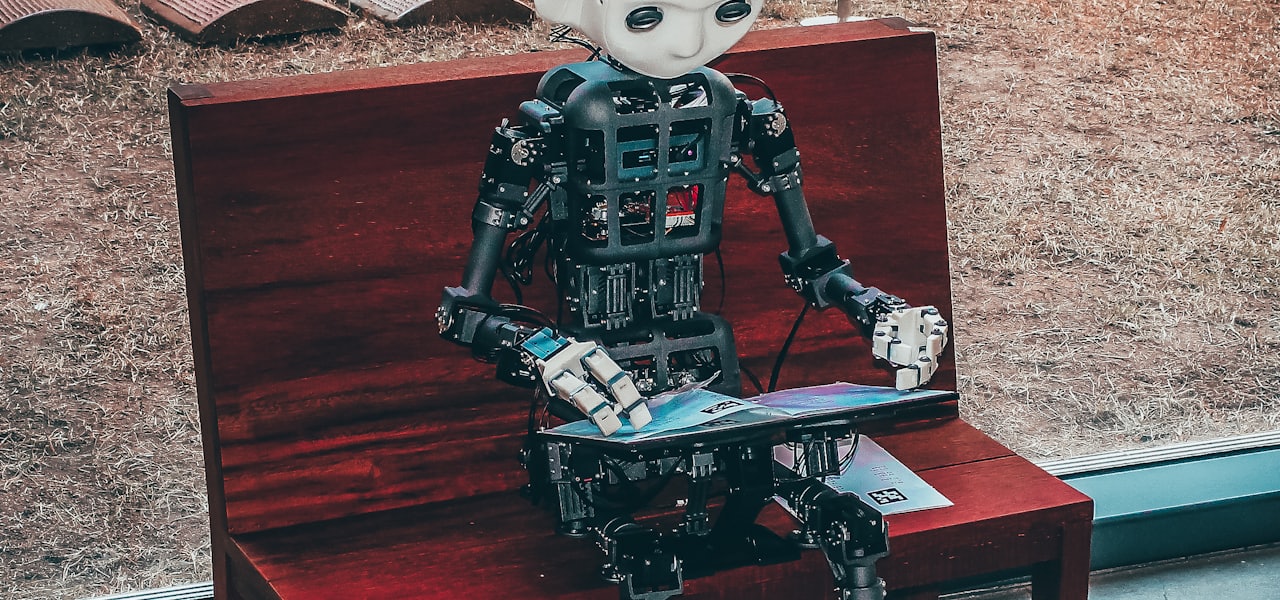
Control engineering, also known as control systems engineering and, in some European countries, automation engineering, is an engineering discipline that deals with control systems, applying control theory to design equipment and systems with desired behaviors in control environments. The discipline of controls overlaps and is usually taught along with electrical engineering, chemical engineering and mechanical engineering at many institutions around the world. The practice uses sensors and detectors to measure the output performance of the process being controlled; these measurements are used to provide corrective feedback helping to achieve the desired performance. Systems designed to perform without requiring human input are called automatic control systems (such as cruise control for regulating the speed of a car). Multi-disciplinary in nature, control systems engineering activities focus on implementation of control systems mainly derived by mathematical modeling of a diverse range of systems. == Overview == Modern day control engineering is a relatively new field of study that gained significant attention during the 20th century with the advancement of technology. It can be broadly defined or classified as practical application of control theory. Control engineering plays an essential role in a wide range of control systems, from simple household washing machines to high-performance fighter aircraft. It seeks to understand physical systems, using mathematical modelling, in terms of inputs, outputs and various components with different behaviors; to use control system design tools to develop controllers for those systems; and to implement controllers in physical systems employing available technology. A system can be mechanical, electrical, fluid, chemical, financial or biological, and its mathematical modelling, analysis and controller design uses control theory in one or many of the time, frequency and complex-s domains, depending on the nature of the design problem. Control engineering is the engineering discipline that focuses on the modeling of a diverse range of dynamic systems (e.g. mechanical systems) and the design of controllers that will cause these systems to behave in the desired manner. Although such controllers need not be electrical, many are and hence control engineering is often viewed as a subfield of electrical engineering. Electrical circuits, digital signal processors and microcontrollers can all be used to implement control systems. Control engineering has a wide range of applications from the flight and propulsion systems of commercial airliners to the cruise control present in many modern automobiles. In most cases, control engineers utilize feedback when designing control systems. This is often accomplished using a proportional–integral–derivative controller (PID controller) system. For example, in an automobile with cruise control the vehicle's speed is continuously monitored and fed back to the system, which adjusts the motor's torque accordingly. Where there is regular feedback, control theory can be used to determine how the system responds to such feedback. In practically all such systems stability is important and control theory can help ensure stability is achieved. Although feedback is an important aspect of control engineering, control engineers may also work on the control of systems without feedback. This is known as open loop control. A classic example of open loop control is a washing machine that runs through a pre-determined cycle without the use of sensors. == History == Automatic control systems were first developed over two thousand years ago. The first feedback control device on record is thought to be the ancient Ktesibios's water clock in Alexandria, Egypt, around the third century BCE. It kept time by regulating the water level in a vessel and, therefore, the water flow from that vessel. This certainly was a successful device as water clocks of similar design were still being made in Baghdad when the Mongols captured the city in 1258 CE. A variety of automatic devices have been used over the centuries to accomplish useful tasks or simply just to entertain. The latter includes the automata, popular in Europe in the 17th and 18th centuries, featuring dancing figures that would repeat the same task over and over again; these automata are examples of open-loop control. Milestones among feedback, or "closed-loop" automatic control devices, include the temperature regulator of a furnace attributed to Drebbel, circa 1620, and the centrifugal flyball governor used for regulating the speed of steam engines by James Watt in 1788. In his 1868 paper "On Governors", James Clerk Maxwell was able to explain instabilities exhibited by the flyball governor using differential equations to describe the control system. This demonstrated the importance and usefulness of mathematical models and methods in understanding complex phenomena, and it signaled the beginning of mathematical control and systems theory. Elements of control theory had appeared earlier but not as dramatically and convincingly as in Maxwell's analysis. Control theory made significant strides over the next century. New mathematical techniques, as well as advances in electronic and computer technologies, made it possible to control significantly more complex dynamical systems than the original flyball governor could stabilize. New mathematical techniques included developments in optimal control in the 1950s and 1960s followed by progress in stochastic, robust, adaptive, nonlinear control methods in the 1970s and 1980s. Applications of control methodology have helped to make possible space travel and communication satellites, safer and more efficient aircraft, cleaner automobile engines, and cleaner and more efficient chemical processes. Before it emerged as a unique discipline, control engineering was practiced as a part of mechanical engineering and control theory was studied as a part of electrical engineering since electrical circuits can often be easily described using control theory techniques. In the first control relationships, a current output was represented by a voltage control input. However, not having adequate technology to implement electrical control systems, designers were left with the option of less efficient and slow responding mechanical systems. A very effective mechanical controller that is still widely used in some hydro plants is the governor. Later on, previous to modern power electronics, process control systems for industrial applications were devised by mechanical engineers using pneumatic and hydraulic control devices, many of which are still in use today. === Mathematical modelling === David Quinn Mayne, (1930–2024) was among the early developers of a rigorous mathematical method for analysing Model predictive control algorithms (MPC). It is currently used in tens of thousands of applications and is a core part of the advanced control technology by hundreds of process control producers. MPC's major strength is its capacity to deal with nonlinearities and hard constraints in a simple and intuitive fashion. His work underpins a class of algorithms that are probably correct, heuristically explainable, and yield control system designs which meet practically important objectives. == Control systems == == Control theory == == Education == At many universities around the world, control engineering courses are taught primarily in electrical engineering and mechanical engineering, but some courses can be instructed in mechatronics engineering, and aerospace engineering. In others, control engineering is connected to computer science, as most control techniques today are implemented through computers, often as embedded systems (as in the automotive field). The field of control within chemical engineering is often known as process control. It deals primarily with the control of variables in a chemical process in a plant. It is taught as part of the undergraduate curriculum of any chemical engineering program and employs many of the same principles in control engineering. Other engineering disciplines also overlap with control engineering as it can be applied to any system for which a suitable model can be derived. However, specialised control engineering departments do exist, for example, in Italy there are several master in Automation & Robotics that are fully specialised in Control engineering or the Department of Automatic Control and Systems Engineering at the University of Sheffield or the Department of Robotics and Control Engineering at the United States Naval Academy and the Department of Control and Automation Engineering at the Istanbul Technical University. Control engineering has diversified applications that include science, finance management, and even human behavior. Students of control engineering may start with a linear control system course dealing with the time and complex-s domain, which req
Text-to-video model
A text-to-video model is a form of generative artificial intelligence that uses a natural language description as input to produce a video relevant to the input text. Advancements during the 2020s in the generation of high-quality, text-conditioned videos have largely been driven by the development of video diffusion models. == Models == There are different models, including open source models. Chinese-language input CogVideo is the earliest text-to-video model "of 9.4 billion parameters" to be developed, with its demo version of open source codes first presented on GitHub in 2022. That year, Meta Platforms released a partial text-to-video model called "Make-A-Video", and Google's Brain (later Google DeepMind) introduced Imagen Video, a text-to-video model with 3D U-Net. === 2023 === In February 2023, Runway released Gen-1 and Gen-2, among the first commercially available text-to-video and video-to-video models accessible to the public through a web interface. Gen-1, initially released as a video-to-video model, allowed users to transform existing video footage using text or image prompts. Gen-2, introduced in March 2023 and made publicly available in June 2023, added text-to-video capabilities, enabling users to generate videos from text prompts alone. In March 2023, a research paper titled "VideoFusion: Decomposed Diffusion Models for High-Quality Video Generation" was published, presenting a novel approach to video generation. The VideoFusion model decomposes the diffusion process into two components: base noise and residual noise, which are shared across frames to ensure temporal coherence. By utilizing a pre-trained image diffusion model as a base generator, the model efficiently generated high-quality and coherent videos. Fine-tuning the pre-trained model on video data addressed the domain gap between image and video data, enhancing the model's ability to produce realistic and consistent video sequences. In the same month, Adobe introduced Firefly AI as part of its features. === 2024 === In January 2024, Google announced development of a text-to-video model named Lumiere which is anticipated to integrate advanced video editing capabilities. Matthias Niessner and Lourdes Agapito at AI company Synthesia work on developing 3D neural rendering techniques that can synthesise realistic video by using 2D and 3D neural representations of shape, appearances, and motion for controllable video synthesis of avatars. In June 2024, Luma Labs launched its Dream Machine video tool. That same month, Kuaishou extended its Kling AI text-to-video model to international users. In July 2024, TikTok owner ByteDance released Jimeng AI in China, through its subsidiary, Faceu Technology. By September 2024, the Chinese AI company MiniMax debuted its video-01 model, joining other established AI model companies like Zhipu AI, Baichuan, and Moonshot AI, which contribute to China's involvement in AI technology. In December 2024 Lightricks launched LTX Video as an open source model. === 2025 === Alternative approaches to text-to-video models include Google's Phenaki, Hour One, Colossyan, Runway's Gen-3 Alpha, and OpenAI's Sora, Several additional text-to-video models, such as Plug-and-Play, Text2LIVE, and TuneAVideo, have emerged. FLUX.1 developer Black Forest Labs has announced its text-to-video model SOTA. Google was preparing to launch a video generation tool named Veo for YouTube Shorts in 2025. In May 2025, Google launched the Veo 3 iteration of the model. It was noted for its impressive audio generation capabilities, which were a previous limitation for text-to-video models. In July 2025 Lightricks released an update to LTX Video capable of generating clips reaching 60 seconds, and in October 2025 it released LTX-2, with audio capabilities built in. === 2026 === In February 2026, ByteDance released Seedance 2.0, it was noted for its impressive realistic generation, motion and camera control and 15 second generation, however the model faced huge critiscism from Motion Picture Association for copyright infringement. After viewing a viral clip of a fight between actors Brad Pitt and Tom Cruise, Rhett Reese, who is the co-writer of Deadpool & Wolverine and Zombieland announced that on social media "I hate to say it. It’s likely over for us," further stating that "In next to no time, one person is going to be able to sit at a computer and create a movie indistinguishable from what Hollywood now releases." == Architecture and training == There are several architectures that have been used to create text-to-video models. Similar to text-to-image models, these models can be trained using Recurrent Neural Networks (RNNs) such as long short-term memory (LSTM) networks, which has been used for Pixel Transformation Models and Stochastic Video Generation Models, which aid in consistency and realism respectively. An alternative for these include transformer models. Generative adversarial networks (GANs), Variational autoencoders (VAEs), — which can aid in the prediction of human motion — and diffusion models have also been used to develop the image generation aspects of the model. Text-video datasets used to train models include, but are not limited to, WebVid-10M, HDVILA-100M, CCV, ActivityNet, and Panda-70M. These datasets contain millions of original videos of interest, generated videos, captioned-videos, and textual information that help train models for accuracy. Text-video datasets used to train models include, but are not limited to PromptSource, DiffusionDB, and VidProM. These datasets provide the range of text inputs needed to teach models how to interpret a variety of textual prompts. The video generation process involves synchronizing the text inputs with video frames, ensuring alignment and consistency throughout the sequence. This predictive process is subject to decline in quality as the length of the video increases due to resource limitations. The Will Smith Eating Spaghetti test is a benchmark for models. == Limitations == Despite the rapid evolution of text-to-video models in their performance, a primary limitation is that they are very computationally heavy which limits its capacity to provide high quality and lengthy outputs. Additionally, these models require a large amount of specific training data to be able to generate high quality and coherent outputs, which brings about the issue of accessibility. Moreover, models may misinterpret textual prompts, resulting in video outputs that deviate from the intended meaning. This can occur due to limitations in capturing semantic context embedded in text, which affects the model's ability to align generated video with the user's intended message. Various models, including Make-A-Video, Imagen Video, Phenaki, CogVideo, GODIVA, and NUWA, are currently being tested and refined to enhance their alignment capabilities and overall performance in text-to-video generation. Another issue with the outputs is that text or fine details in AI-generated videos often appear garbled, a problem that stable diffusion models also struggle with. Examples include distorted hands and unreadable text. == Ethics == The deployment of text-to-video models raises ethical considerations related to content generation. These models have the potential to create inappropriate or unauthorized content, including explicit material, graphic violence, misinformation, and likenesses of real individuals without consent. Ensuring that AI-generated content complies with established standards for safe and ethical usage is essential, as content generated by these models may not always be easily identified as harmful or misleading. The ability of AI to recognize and filter out NSFW or copyrighted content remains an ongoing challenge, with implications for both creators and audiences. == Impacts and applications == Text-to-video models offer a broad range of applications that may benefit various fields, from educational and promotional to creative industries. These models can streamline content creation for training videos, movie previews, gaming assets, and visualizations, making it easier to generate content. During the Russo-Ukrainian war, fake videos made with artificial intelligence were created as part of a propaganda war against Ukraine and shared in social media. These included depictions of children in the Ukrainian Armed Forces, fake ads targeting children encouraging them to denounce critics of the Ukrainian government, or fictitious statements by Ukrainian President Volodymyr Zelenskyy about the country's surrender, among others. === Movies === Kaur vs Kore is the first Indian feature film made using generative AI which features dual role for the AI character of Sunny Leone, set to release in 2026. Chiranjeevi Hanuman – The Eternal is an Indian movie made entirely using Generative AI created by Vijay Subramaniam which is set for theatrical release in 2026. The movie was widely criticised by the Film makers in the Bollywood industr
KoalaPad
The KoalaPad is a graphics tablet, released in 1983 by US company Koala Technologies Corporation, for the Apple II, TRS-80 Color Computer (as the TRS-80 Touch Pad), Atari 8-bit computers, Commodore 64, and IBM PC compatibles. Originally designed by Dr. David Thornburg as a low-cost computer drawing tool for schools, the Koala Pad and the bundled drawing program, KoalaPainter, was popular with home users as well. KoalaPainter was called KoalaPaint in some versions for the Apple II, and PC Design for the IBM PC. A program called Graphics Exhibitor was included for creating slideshow presentations from KoalaPainter drawings. == Description == The pad was four inches square (i.e. roughly 10×10 cm) and mounted on a slightly inclined base with the back of the pad higher than the front. At the top, "behind" the pad, were two buttons. The pad hooked into the computer using the analog signals of the joystick ports (the so-called paddle inputs), which meant that it had a low resolution and tended to jostle the cursor if moved during use. As an alternative to the drawing stylus, the pad could as easily be operated by the user's fingers for tasks that demanded less precision, such as selecting between menu items (thus using the pad as a kind of "indirect touch screen"). The top-mounted buttons tended to be somewhat frustrating to use, as the user had to "reach around" the stylus to push the buttons in order to start or stop drawing. A similar tablet from Atari, the Atari CX77 Touch Tablet, addressed this with a built-in button on the stylus, which some enterprising users adapted for use with their KoalaPad. == KoalaPainter == The pad shipped with a simple bitmap graphics editor developed by Audio Light called KoalaPainter, PC Design or Micro Illustrator depending on the target machine (see release history). Although bundled with the pad, KoalaPainter could also be operated using an ordinary digital joystick. One unique feature of the program, for its time, was that it held two pictures in the computer's memory, allowing the user to flip from one to the other—a function commonly used in order to study the differences between an original and a modified picture, and to copy and paste between two different pictures. Some third-party bitmap editors could also be used with the KoalaPad, such as Broderbund's Dazzle Draw for the Apple II. === Release history === KoalaPainter for Commodore 64 (1983) and Atari 8-bit computers (1983) PC Design for the IBM PC (1983) Micro Illustrator for the Apple II (1983), Atari 8-bit computers (1983) and Commodore Plus/4 (1984) KoalaPainter II for Commodore 64 (1984) === Reception === Ahoy! called KoalaPainter "a very powerful and effective color drawing package", and concluded that it and the KoalaPad were "excellent in ease of use, a fine choice for a beginner as well as young children". BYTE's reviewer stated in December 1984 that he made far fewer errors when using an Apple Mouse with MousePaint than with a KoalaPad and its software. He found that MousePaint was easier to use and more efficient, predicting that the mouse would receive more software support than the pad. Cassie Stahl in InfoWorld's Essential Guide to Atari Computers praised the tablet and its documentation, rating it "Excellent" among all categories and stating that "Playing with the KoalaPad becomes addictive. It does everything it claims to, and it does it well". She also liked Micro Illustrator, rating it "Excellent" except for "Good" for Performance. While criticizing the limited erase function, Stahl reported an undocumented feature enabling exporting pictures to other software. === File format === The Commodore 64 version of KoalaPainter used a fairly simple file format corresponding directly to the way bitmapped graphics are handled on the computer: A two-byte load address, followed immediately by 8,000 bytes of raw bitmap data, 1,000 bytes of raw "Video Matrix" data, 1,000 bytes of raw "Color RAM" data, and a one-byte Background Color field. == KoalaWare == Koala Technologies offered more software beyond the bundled KoalaPainter and Graphics Exhibitor for use with the pad. Among these applications, marketed under the moniker KoalaWare (like KoalaPainter itself), was educational software for use with customized keypads and overlays, such as spelling tools, music programs, and mathematics instruction software, as well as software for "translating" graphical designs into Logo programs.
Turret lathe
A turret lathe is a form of metalworking lathe that is used for repetitive production of duplicate parts, which by the nature of their cutting process are usually interchangeable. It evolved from earlier lathes with the addition of the turret, which is an indexable toolholder that allows multiple cutting operations to be performed, each with a different cutting tool, in easy, rapid succession, with no need for the operator to perform set-up tasks in between (such as installing or uninstalling tools) or to control the toolpath. The latter is due to the toolpath's being controlled by the machine, either in jig-like fashion, via the mechanical limits placed on it by the turret's slide and stops, or via digitally-directed servomechanisms for computer numerical control lathes. The name derives from the way early turrets took the general form of a flattened cylindrical block mounted to the lathe's cross-slide, capable of rotating about the vertical axis and with toolholders projecting out to all sides, and thus vaguely resembled a swiveling gun turret. Capstan lathe is the usual name in the UK and Commonwealth, though the two terms are also used in contrast: see below, Capstan versus turret. == History == Turret lathes became indispensable to the production of interchangeable parts and for mass production. The first turret lathe was built by Stephen Fitch in 1845 to manufacture screws for pistol percussion parts. In the mid-nineteenth century, the need for interchangeable parts for Colt revolvers enhanced the role of turret lathes in achieving this goal as part of the "American system" of manufacturing arms. Clock-making and bicycle manufacturing had similar requirements. Christopher Spencer invented the first fully automated turret lathe in 1873, which led to designs using cam action or hydraulic mechanisms. From the late-19th through mid-20th centuries, turret lathes, both manual and automatic (i.e., screw machines and chuckers), were one of the most important classes of machine tools for mass production. They were used extensively in the mass production for the war effort in World War II. The U.S. company Warner & Swasey was one of the premier brands in heavy turret lathes between the 1910s and 1960s; it became the world's largest manufacturer of such lathes by 1928. During World War II, it employed 7,000 people and produced half of the turret lathes manufactured in the United States. == Types == There are many variants of the turret lathe. They can be most generally classified by size (small, medium, or large); method of control (manual, automated mechanically, or automated via computer (numerical control (NC) or computer numerical control (CNC)); and bed orientation (horizontal or vertical). === Archetypical: horizontal, manual === In the late 1830s a "capstan lathe" with a turret was patented in Britain. The first American turret lathe was invented by Stephen Fitch in 1845. The archetypical turret lathe, and the first in order of historical appearance, is the horizontal-bed, manual turret lathe. The term "turret lathe" without further qualification is still understood to refer to this type. The formative decades for this class of machine were the 1840s through 1860s, when the basic idea of mounting an indexable turret on a bench lathe or engine lathe was born, developed, and disseminated from the originating shops to many other factories. Some important tool-builders in this development were Stephen Fitch; Gay, Silver & Co.; Elisha K. Root of Colt; J.D. Alvord of the Sharps Armory; Frederick W. Howe, Richard S. Lawrence, and Henry D. Stone of Robbins & Lawrence; J.R. Brown of Brown & Sharpe; and Francis A. Pratt of Pratt & Whitney. Various designers at these and other firms later made further refinements. === Semi-automatic === Sometimes machines similar to those above, but with power feeds and automatic turret-indexing at the end of the return stroke, are called "semi-automatic turret lathes". This nomenclature distinction is blurry and not consistently observed. The term "turret lathe" encompasses them all. During the 1860s, when semi-automatic turret lathes were developed, they were sometimes called "automatic". What we today would call "automatics", that is, fully automatic machines, had not been developed yet. During that era both manual and semi-automatic turret lathes were sometimes called "screw machines", although we today reserve that term for fully automatic machines. === Automatic === During the 1870s through 1890s, the mechanically automated "automatic" turret lathe was developed and disseminated. These machines can execute many part-cutting cycles without human intervention. Thus the duties of the operator, which were already greatly reduced by the manual turret lathe, were even further reduced, and productivity increased. These machines use cams to automate the sliding and indexing of the turret and the opening and closing of the chuck. Thus, they execute the part-cutting cycle somewhat analogously to the way in which an elaborate cuckoo clock performs an automated theater show. Small- to medium-sized automatic turret lathes are usually called "screw machines" or "automatic screw machines", while larger ones are usually called "automatic chucking lathes", "automatic chuckers", or "chuckers". Such machine tools of the "automatic" variety, which in the pre-computer era meant mechanically automated, had already reached a highly advanced state by World War I. === Computer numerical control === When World War II ended, the digital computer was poised to develop from a colossal laboratory curiosity into a practical technology that could begin to disseminate into business and industry. The advent of computer-based automation in machine tools via numerical control (NC) and then computer numerical control (CNC) displaced to a large extent, but not at all completely, the previously existing manual and mechanically automated machines. Numerically controlled turrets allow automated selection of tools on a turret. CNC lathes may be horizontal or vertical in orientation and mount six separate tools on one or more turrets. Such machine tools can work in two axes per turret, with up to six axes being feasible for complex work. === Vertical === Vertical turret lathes have the workpiece held vertically, which allows the headstock to sit on the floor and the faceplate to become a horizontal rotating table, analogous to a huge potter's wheel. This is useful for the handling of very large, heavy, short workpieces. Vertical lathes in general are also called "vertical boring mills" or often simply "boring mills"; therefore a vertical turret lathe is a vertical boring mill equipped with a turret. == Other variations == === Capstan versus turret === The term "capstan lathe" overlaps in sense with the term "turret lathe" to a large extent. In many times and places, it has been understood to be synonymous with "turret lathe". In other times and places it has been held in technical contradistinction to "turret lathe", with the difference being in whether the turret's slide is fixed to the bed (ram-type turret) or slides on the bed's ways (saddle-type turret). The difference in terminology is mostly a matter of United Kingdom and Commonwealth usage versus United States usage. === Flat === A subtype of horizontal turret lathe is the flat-turret lathe. Its turret is flat (and analogous to a rotary table), allowing the turret to pass beneath the part. Patented by James Hartness of Jones & Lamson, and first disseminated in the 1890s, it was developed to provide more rigidity via requiring less overhang in the tool setup, especially when the part is relatively long. === Hollow-hexagon === Hollow-hexagon turret lathes competed with flat-turret lathes by taking the conventional hexagon turret and making it hollow, allowing the part to pass into it during the cut, analogously to how the part would pass over the flat turret. In both cases, the main idea is to increase rigidity by allowing a relatively long part to be turned without the tool overhang that would be needed with a conventional turret, which is not flat or hollow. === Monitor lathe === The term "monitor lathe" formerly (1860s–1940s) referred to the class of small- to medium-sized manual turret lathes used on relatively small work. The name was inspired by the monitor-class warships, which the monitor lathe's turret resembled. Today, lathes of such appearance, such as the Hardinge DSM-59 and its many clones, are still common, but the name "monitor lathe" is no longer current in the industry. === Toolpost turrets and tailstock turrets === Turrets can be added to non-turret lathes (bench lathes, engine lathes, toolroom lathes, etc.) by mounting them on the toolpost, tailstock, or both. Often these turrets are not as large as a turret lathe's, and they usually do not offer the sliding and stopping that a turret lathe's turret does; but they do offer the ability to index through successive tool
Glossary of robotics
Robotics is the branch of technology that deals with the design, construction, operation, structural disposition, manufacture and application of robots. Robotics is related to the sciences of electronics, engineering, mechanics, and software. The following is a list of common definitions related to the Robotics field. == A == Actuator: a motor that translates control signals into mechanical movement. The control signals are usually electrical but may, more rarely, be pneumatic or hydraulic. The power supply may likewise be any of these. It is common for electrical control to be used to modulate a high-power pneumatic or hydraulic motor. Aerobot: a robot capable of independent flight on other planets. A type of aerial robot. Arduino: The current platform of choice for small-scale robotic experimentation and physical computing. Artificial intelligence: is the intelligence of machines and the branch of computer science that aims to create it. Aura (satellite): a robotic spacecraft launched by NASA in 2004 which collects atmospheric data from Earth. Automaton: an early self-operating robot, performing exactly the same actions, over and over. Autonomous vehicle: a vehicle equipped with an autopilot system, which is capable of driving from one point to another without input from a human operator. == B == Biomimetic: See Bionics. Bionics: also known as biomimetics, biognosis, biomimicry, or bionical creativity engineering is the application of biological methods and systems found in nature to the study and design of engineering systems and modern technology. == C == CAD/CAM (computer-aided design and computer-aided manufacturing): These systems and their data may be integrated into robotic operations. Čapek, Karel: Czech author who coined the term 'robot' in his 1921 play, Rossum's Universal Robots. Chandra X-ray Observatory: a robotic spacecraft launched by NASA in 1999 to collect astronomical data. Cloud robotics: robots empowered with more capacity and intelligence from cloud. Combat, robot: a hobby or sport event where two or more robots fight in an arena to disable each other. This has developed from a hobby in the 1990s to several TV series worldwide. Cruise missile: a robot-controlled guided missile that carries an explosive payload. Cyborg: also known as a cybernetic organism, a being with both biological and artificial (e.g. electronic, mechanical or robotic) parts. == D == Degrees of freedom: the extent to which a robot can move itself; expressed in terms of Cartesian coordinates (x, y, and z) and angular movements (yaw, pitch, and roll). Delta robot: a tripod linkage, used to construct fast-acting manipulators with a wide range of movement. Drive Power: The energy source or sources for the robot actuators. == E == Emergent behaviour, a complicated resultant behaviour that emerges from the repeated operation of simple underlying behaviours. Envelope (Space), Maximum The volume of space encompassing the maximum designed movements of all robot parts including the end-effector, workpiece, and attachments. Explosive ordnance disposal robot A mobile robot designed to assess whether an object contains explosives; some carry detonators that can be deposited at the object and activated after the robot withdraws. == F == FIRST(For Inspiration and Recognition of Science and Technology): an organization founded by inventor Dean Kamen in 1989 in order to develop ways to inspire students in engineering and technology fields. Forward chaining: a process in which events or received data are considered by an entity to intelligently adapt its behavior. == G == Gynoid: A humanoid robot designed to look like a human female. == H == Haptic: tactile feedback technology using the operator's sense of touch. Also sometimes applied to robot manipulators with their own touch sensitivity. Hexapod (platform): A movable platform using six linear actuators. Often used in flight simulators and fairground rides, they also have applications as a robotic manipulator. Hexapod (walker): A six-legged walking robot, using a simple insect-like locomotion. Human–computer interaction. Humanoid: A robotic entity designed to resemble a human being in form, function, or both. Hydraulics: the control of mechanical force and movement, generated by the application of liquid under pressure. cf. pneumatics. == I == Industrial robot: A reprogrammable, multifunctional manipulator designed to move material, parts, tools, or specialized devices through variable programmed motions for the performance of a variety of tasks. Insect robot: A small robot designed to imitate insect behaviors rather than complex human behaviors. == K == Kalman filter: a mathematical technique to estimate the value of a sensor measurement, from a series of intermittent and noisy values. Kinematics: the study of motion, as applied to robots. This includes both the design of linkages to perform motion, their power, control and stability; also their planning, such as choosing a sequence of movements to achieve a broader task. Inverse Kinematics: the process of determining joint angles required for a robot's end-effector to reach a desired position and orientation in space. Used in motion planning to calculate motor commands from target positions. == L == Linear actuator A form of motor that generates a linear movement directly. == M == Manipulator or gripper: A robotic 'hand'. Mobile robot: A self-propelled and self-contained robot that is capable of moving over a mechanically unconstrained course. Muting: The deactivation of a presence-sensing safeguarding device during a portion of the robot cycle. Mecanum wheel: A wheel fitted with angled rollers that enables a robot vehicle to move in multiple directions, including sideways. == O == Ornithopter – An aerial robot or drone that achieves flight through a flapping-wing mechanism rather than rotating blades or fixed wings, often utilized for highly maneuverable flight. == P == Parallel manipulator: an articulated robot or manipulator based on a number of kinematic chains, actuators and joints, in parallel. cf. serial manipulator. Pendant: Any portable control device that permits an operator to control the robot from within the restricted envelope (space) of the robot. Pneumatics: the control of mechanical force and movement, generated by the application of compressed gas. cf. hydraulics. Powered exoskeleton: is a wearable mobile machine that allow for limb movement with increased strength and endurance. Prosthetic robots: programmable manipulators or devices for missing human limbs. == R == Remote manipulator: A manipulator under direct human control, often used for work with hazardous materials. Robonaut: a development project conducted by NASA to create humanoid robots capable of using space tools and working in similar environments to suited astronauts. == S == Sensor fusion:The process of combining data from multiple sensors, such as LiDAR, cameras, global positioning systems (GPS), and inertial measurement units (IMUs), to produce a more accurate and reliable understanding of an environment than using a single sensor alone. It is widely used in robotics and autonomous systems to improve perception, localization, and decision-making. Serial manipulator: an articulated robot or manipulator with a single series kinematic chain of actuators. cf. parallel manipulator. Service robots are machines that extend human capabilities. Servo, a motor that moves to and maintains a set position under command, rather than continuously moving. Servomechanism An automatic device that uses error-sensing negative feedback to correct the performance of a mechanism. Single Point of Control The ability to operate the robot such that initiation or robot motion from one source of control is possible only from that source and cannot be overridden from another source. Slow Speed Control A mode of robot motion control where the velocity of the robot is limited to allow persons sufficient time either to withdraw the hazardous motion or stop the robot. Snake robot A robot component resembling a tentacle or elephant's trunk, where many small actuators are used to allow continuous curved motion of a robot component, with many degrees of freedom. This is usually applied to snake-arm robots, which use this as a flexible manipulator. A rarer application is the snakebot, where the entire robot is mobile and snake-like, so as to gain access through narrow spaces. Stepper motor Stewart platform A movable platform using six linear actuators, hence also known as a Hexapod. Subsumption architecture A robot architecture that uses a modular, bottom-up design beginning with the least complex behavioral tasks. Surgical robot, a remote manipulator used for keyhole surgery Swarm robotics involve large numbers of mostly simple physical robots. Their actions may seek to incorporate emergent behavior observed in social insects (swarm intelligence). Synchro == T == Teach Mode: The control state that al
Multi-agent reinforcement learning
Multi-agent reinforcement learning (MARL) is a sub-field of reinforcement learning. It focuses on studying the behavior of multiple learning agents that coexist in a shared environment. Each agent is motivated by its own rewards, and does actions to advance its own interests; in some environments these interests are opposed to the interests of other agents, resulting in complex group dynamics. Multi-agent reinforcement learning is closely related to game theory and especially repeated games, as well as multi-agent systems. Its study combines the pursuit of finding ideal algorithms that maximize rewards with a more sociological set of concepts. While research in single-agent reinforcement learning is concerned with finding the algorithm that gets the biggest number of points for one agent, research in multi-agent reinforcement learning evaluates and quantifies social metrics, such as cooperation, reciprocity, equity, social influence, language and discrimination. == Definition == Similarly to single-agent reinforcement learning, multi-agent reinforcement learning is modeled as some form of a Markov decision process (MDP). Fix a set of agents I = { 1 , . . . , N } {\displaystyle I=\{1,...,N\}} . We then define: A set S {\displaystyle S} of environment states. One set A i {\displaystyle {\mathcal {A}}_{i}} of actions for each of the agents i ∈ I = { 1 , … , N } {\displaystyle i\in I=\{1,\dots ,N\}} . P a → ( s , s ′ ) = Pr ( s t + 1 = s ′ ∣ s t = s , a → t = a → ) {\displaystyle P_{\vec {a}}(s,s')=\Pr(s_{t+1}=s'\mid s_{t}=s,{\vec {a}}_{t}={\vec {a}})} is the probability of transition (at time t {\displaystyle t} ) from state s {\displaystyle s} to state s ′ {\displaystyle s'} under joint action a → {\displaystyle {\vec {a}}} . R → a → ( s , s ′ ) {\displaystyle {\vec {R}}_{\vec {a}}(s,s')} is the immediate joint reward after the transition from s {\displaystyle s} to s ′ {\displaystyle s'} with joint action a → {\displaystyle {\vec {a}}} . In settings with perfect information, such as the games of chess and Go, the MDP would be fully observable. In settings with imperfect information, especially in real-world applications like self-driving cars, each agent would access an observation that only has part of the information about the current state. In the partially observable setting, the core model is the partially observable stochastic game in the general case, and the decentralized POMDP in the cooperative case. == Cooperation vs. competition == When multiple agents are acting in a shared environment their interests might be aligned or misaligned. MARL allows exploring all the different alignments and how they affect the agents' behavior: In pure competition settings, the agents' rewards are exactly opposite to each other, and therefore they are playing against each other. Pure cooperation settings are the other extreme, in which agents get the exact same rewards, and therefore they are playing with each other. Mixed-sum settings cover all the games that combine elements of both cooperation and competition. === Pure competition settings === When two agents are playing a zero-sum game, they are in pure competition with each other. Many traditional games such as chess and Go fall under this category, as do two-player variants of video games like StarCraft. Because each agent can only win at the expense of the other agent, many complexities are stripped away. There is no prospect of communication or social dilemmas, as neither agent is incentivized to take actions that benefit its opponent. The Deep Blue and AlphaGo projects demonstrate how to optimize the performance of agents in pure competition settings. One complexity that is not stripped away in pure competition settings is autocurricula. As the agents' policy is improved using self-play, multiple layers of learning may occur. === Pure cooperation settings === MARL is used to explore how separate agents with identical interests can communicate and work together. Pure cooperation settings are explored in recreational cooperative games such as Overcooked, as well as real-world scenarios in robotics. In pure cooperation settings all the agents get identical rewards, which means that social dilemmas do not occur. In pure cooperation settings, oftentimes there are an arbitrary number of coordination strategies, and agents converge to specific "conventions" when coordinating with each other. The notion of conventions has been studied in language and also alluded to in more general multi-agent collaborative tasks. === Mixed-sum settings === Most real-world scenarios involving multiple agents have elements of both cooperation and competition. For example, when multiple self-driving cars are planning their respective paths, each of them has interests that are diverging but not exclusive: Each car is minimizing the amount of time it's taking to reach its destination, but all cars have the shared interest of avoiding a traffic collision. Zero-sum settings with three or more agents often exhibit similar properties to mixed-sum settings, since each pair of agents might have a non-zero utility sum between them. Mixed-sum settings can be explored using classic matrix games such as prisoner's dilemma, more complex sequential social dilemmas, and recreational games such as Among Us, Diplomacy and StarCraft II. Mixed-sum settings can give rise to communication and social dilemmas. == Social dilemmas == As in game theory, much of the research in MARL revolves around social dilemmas, such as prisoner's dilemma, chicken and stag hunt. While game theory research might focus on Nash equilibria and what an ideal policy for an agent would be, MARL research focuses on how the agents would learn these ideal policies using a trial-and-error process. The reinforcement learning algorithms that are used to train the agents are maximizing the agent's own reward; the conflict between the needs of the agents and the needs of the group is a subject of active research. Various techniques have been explored in order to induce cooperation in agents: Modifying the environment rules, adding intrinsic rewards, and more. === Sequential social dilemmas === Social dilemmas like prisoner's dilemma, chicken and stag hunt are "matrix games". Each agent takes only one action from a choice of two possible actions, and a simple 2x2 matrix is used to describe the reward that each agent will get, given the actions that each agent took. In humans and other living creatures, social dilemmas tend to be more complex. Agents take multiple actions over time, and the distinction between cooperating and defecting is not as clear cut as in matrix games. The concept of a sequential social dilemma (SSD) was introduced in 2017 as an attempt to model that complexity. There is ongoing research into defining different kinds of SSDs and showing cooperative behavior in the agents that act in them. == Autocurricula == An autocurriculum (plural: autocurricula) is a reinforcement learning concept that's salient in multi-agent experiments. As agents improve their performance, they change their environment; this change in the environment affects themselves and the other agents. The feedback loop results in several distinct phases of learning, each depending on the previous one. The stacked layers of learning are called an autocurriculum. Autocurricula are especially apparent in adversarial settings, where each group of agents is racing to counter the current strategy of the opposing group. The Hide and Seek game is an accessible example of an autocurriculum occurring in an adversarial setting. In this experiment, a team of seekers is competing against a team of hiders. Whenever one of the teams learns a new strategy, the opposing team adapts its strategy to give the best possible counter. When the hiders learn to use boxes to build a shelter, the seekers respond by learning to use a ramp to break into that shelter. The hiders respond by locking the ramps, making them unavailable for the seekers to use. The seekers then respond by "box surfing", exploiting a glitch in the game to penetrate the shelter. Each "level" of learning is an emergent phenomenon, with the previous level as its premise. This results in a stack of behaviors, each dependent on its predecessor. Autocurricula in reinforcement learning experiments are compared to the stages of the evolution of life on Earth and the development of human culture. A major stage in evolution happened 2-3 billion years ago, when photosynthesizing life forms started to produce massive amounts of oxygen, changing the balance of gases in the atmosphere. In the next stages of evolution, oxygen-breathing life forms evolved, eventually leading up to land mammals and human beings. These later stages could only happen after the photosynthesis stage made oxygen widely available. Similarly, human culture could not have gone through the Industrial Revolution in the 18th century without the resources and insights gaine
Masking (art)
In art, craft, and engineering, masking is the use of materials to protect areas from change, or to focus change on other areas. This can describe either the techniques and materials used to control the development of a work of art by protecting a desired area from change; or a phenomenon that (either intentionally or unintentionally) causes a sensation to be concealed from conscious attention. The term is derived from the word mask, in the sense that it hides the face from view. == In painting == Masking materials supplement a painter's dexterity and choice of applicator to control where paint is laid. Examples include the use of a stencil or masking tape to protect areas which are not to be painted. === Solid masks === Most solid masks require an adhesive to hold the mask in place while work is performed. Some, such as masking tape and frisket, come with adhesive pre-applied. Solid masks are readily available in bulk, and are used in large painting jobs. Paper products Kraft paper Butcher paper Masking tape Plastic film Frisket Polyester tape Stencils Silk screen === Liquid masks === Liquid masks are preferred where precision is needed; they prevent paint from seeping underneath, resulting in clean edges. Care must be taken to remove them without damaging the work underneath. Latex or other polymers Molten wax Gesso, typically a substrate for painting, but can also be applied to achieve masking effects == In photography == Masks used for photography are used to enhance the quality of an image. Representations of a scene—whether film, video display, or printed—do not have the dynamic contrast range available to the human eye looking directly at the same scene. Adjusting the contrast in an image helps restore some of the perceived qualities of the original scene. These adjustments are typically performed on "blown-out" highlights, and "crushed" or "muddy" shadow areas, where clipping has occurred; or on desaturated colors. Photographic masks are peculiar in that they are produced from the image they will alter, an exercise in recursion. Masks used to produce other effects are similar to those used in painting. === Controlling exposure === ==== Film ==== The basic methods of controlling exposure are dodging and burning, which respectively lighten (reduce exposure) and darken (increase exposure) areas of an image. The tools a film photographer uses range from shaped pieces of black material (such as studio foil, foam, and paper) to the photographer's hands. To create a photographic mask, a sheet of negative film is contact-exposed to the original film negative or slide positive in a particular way. Both films are then combined to produce a processed positive. The process is similar when applied using digital techniques: the inverse of the working image is reduced to an image mask; filters or other adjustments are then applied, using the mask to selectively block portions of the image. ==== Digital ==== Image editors offer at the very least a "Select All" command and a rectangular "marquee" selection tool. (The word "marquee" describes the "crawling ants" border used to highlight the active region.) Once a selection is created, further changes to the image will be confined to that area. To continue editing the rest of the image, the selection is either "deselected" or the entire image is selected. Advanced suites offer more ways to select portions of an image, as well as ways to combine these selections through. Selection masks can be switched between an editable greyscale image and a mask. They allow the user to create a mask using the suite's painting tools. === Contrast masking === When the contrast range of an image needs to be adjusted, a contrast mask is a simple solution. The processed image resembles what would be achieved when exposing through a neutral density filter, but the effects are focused highly upon the extreme regions of the image. The blocking areas of the mask coincide with the highlights of the image, and the permissive areas with the shadows, resulting in more detail appearing in each. ==== Film ==== The mask is often made from high-quality black-and-white film, such as Kodak Technical Pan, which allows for a degree of softening on the mask. Its processing time is reduced so as to not completely oppose the original negative. Both negatives are combined and registered, and collectively exposed with additional time to compensate for the presence of the mask. ==== Digital ==== Contrast masking is made simpler with digital editing. A grayscale version of the image is produced, either by desaturation or by calculating selected ratios of the image's color channels, inverted, and blurred. The mask and original image are blended together to produce the final processed image. Some image editors allow for refinement of the effect by changing the strength of the blend. Contrast masking can be considered to be the opposite of gamma correction, which adjusts the midtones of an image. Effects similar to contrast masking can be achieved by adjusting the response curves of an image. === Unsharp masking === A derivative of contrast masking is unsharp masking, an unusual term for a process intended to increase the apparent sharpness (acutance) of an image. Unsharp masking uses a blurred form of the image to increase contrast along regions of moderate contrast difference. Around edges, the blur region causes highlights to overexpose and shadows to underexpose. Taken to an extreme, the edges become overly visible and detract from the quality of the image—this is referred to as halation. Unsharp masking does not increase the actual sharpness, as it cannot recover details lost to blurring. ==== Film ==== Unsharp masking allows the photographer to sharpen areas that have become blurred in the original negative, due to long shutter speed/exposure time, or from using a wide aperture/"fast" lens. When creating the unsharp mask, extra space or diffusing material is added between the image and the mask to produce the necessary blur. ==== Digital ==== Unsharp masking has become automated in digital editing, with higher-end suites offering the process as a "tool" or "filter" in their standard sharpening kits—the actual creation of a mask is bypassed in favor of calculations that represent the mask's effect. The process depends on three factors: the radius of the blur, the strength of the effect, and the threshold degree of contrast above which the effect will be applied. (Adjusting the threshold allows the editor to apply the effect selectively upon moderately defined edges and ignore image noise.) Unsharp masking is computationally more complex than other sharpening algorithms, but results in a higher-quality remedy. Deconvolution allows for truer sharpening, but is much more complex than unsharp masking.